
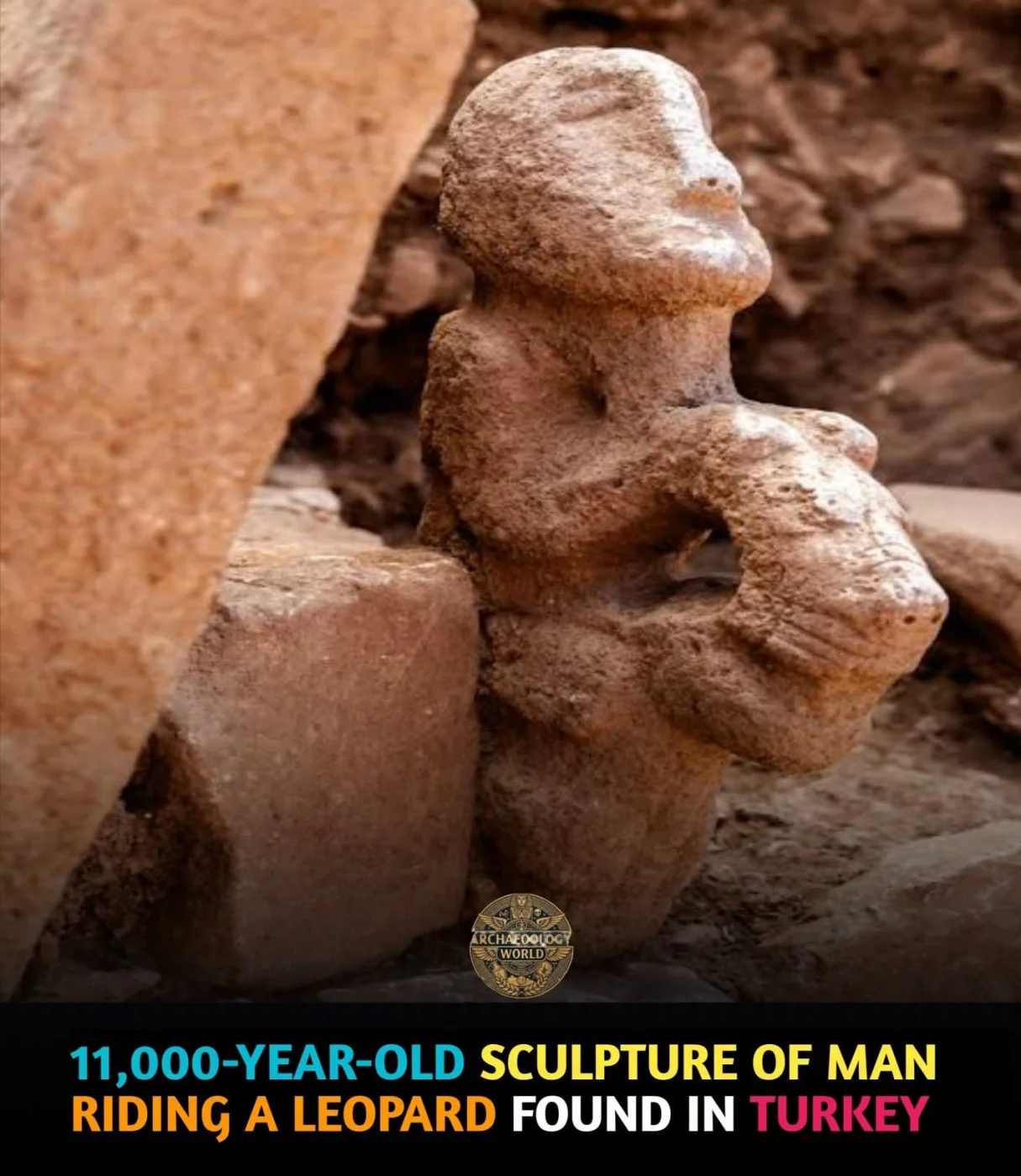
Archaeologists in southeastern Türkiye unearthed a 70-centimeter (28-inch) tall limestone sculpture dating back roughly 11,000 years to the Pre-Pottery Neolithic period at Karahantepe. Key Details of the Discovery Location & Setting: Found during excavations at Karahantepe near Şanlıurfa, part of the Taş Tepeler ("Stone Hills") complex that includes Göbeklitepe. The sculpture was discovered in situ—resting on a stone bench lining the wall inside a small, circular stone-paved structure about 3 meters across. Artistic Significance: While earlier art discovered at Karahantepe featured beasts clinging to humans or humans carrying animals, this composite statue reverses that visual narrative by depicting a human seated atop a leopard. Historical Context: Dated to around 9000–8500 BCE, the work comes from a pivotal era when hunter-gatherer groups were first forming permanent settlements, creating complex ritual imagery long before the invention of writing or cities.
Comments 0
Log in to leave a comment.